Garage Door Track Systems, Explained.
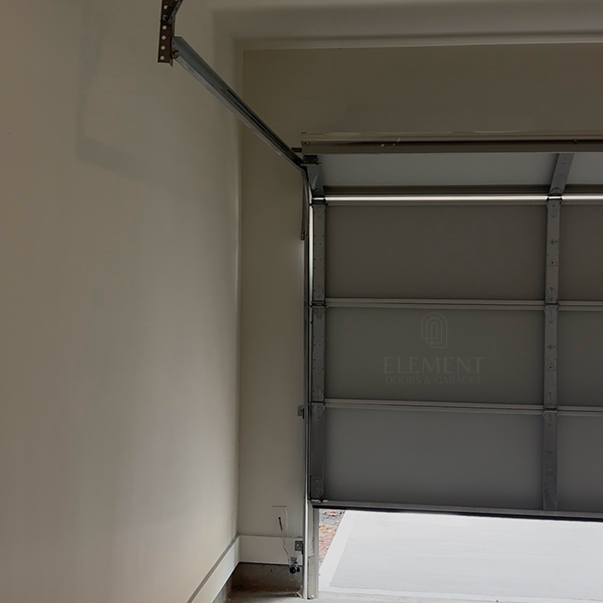
When you think about your garage door, you probably think about the panels or the motor. But there is a silent hero working behind the scenes to make sure those panels move safely from "closed" to "overhead." That hero is the track system.
At Element Doors and Garages, we know that the right track system can be the difference between a garage that feels like a cramped storage unit and one that feels like a spacious workshop. Here is everything you need to know about the tracks that guide your garage door.
The Anatomy of a Track System
A standard residential track system is made of high-strength galvanized steel and consists of three main parts:
Vertical Tracks: These are the rails attached to the wall on either side of your door opening.
Horizontal Tracks: These run parallel to your ceiling and support the weight of the door when it's open.
The Radius (The Curve): This is the curved section that connects the vertical and horizontal pieces.
Common Track Types: Which One Do You Have?
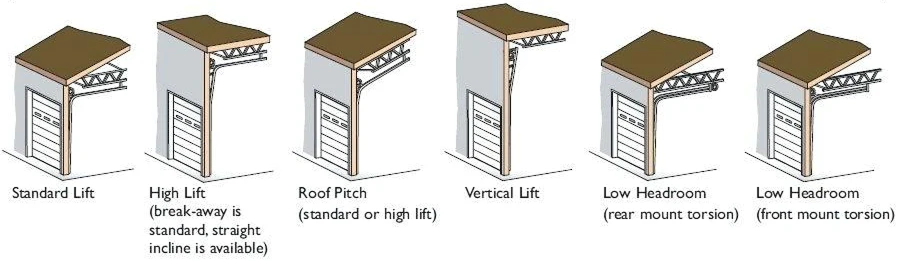
The layout of your tracks depends entirely on how much headroom (the space between the top of the door and the ceiling) you have in your garage.
Standard Lift: The most common setup. The door goes up a little bit and then curves back over your head. It usually requires about 12 to 15 inches of headroom.
Low Headroom (Dual-Track): If you have a very low ceiling or a big structural beam in the way, we use a "double-track" system. This allows the top section of the door to turn into the horizontal position sooner, fitting into spaces as tight as 7 to 9 inches.
High Lift: If you have 10-foot or 12-foot ceilings but a standard 7-foot door, you have a lot of wasted "dead space." High-lift tracks extend the vertical section so the door huggers the ceiling much higher up.
Pro Tip: This is the perfect setup if you want to install a car lift!
Vertical Lift: Usually seen in commercial warehouses, the door goes straight up the wall and never turns horizontally. This requires a ceiling height that is at least double the height of the door.
Roof Pitch Tracks: These are custom-angled to follow the slope of a vaulted or cathedral ceiling, keeping the tracks tucked away and out of sight.
Why "The Radius" Matters
The "Radius" refers to how sharp the curve is in your track. Most homes use a 12-inch or 15-inch radius.
12-inch Radius: A tighter curve. It’s great for saving space, but it puts a little more stress on the rollers as they "take the corner."
15-inch Radius: A wider, smoother curve. This is our preferred choice at Element because it makes the door run quieter and reduces wear and tear on the motor.
20-inch and 32-inch Radius: Used on bigger and commercial use cases
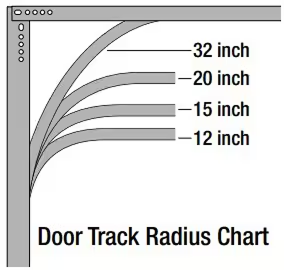
Chamberlain’s Door Track Radius Chart
How to maintain your garage door tracks
To keep your track system in top shape, follow these three simple rules:
Clear the Path: Never store brooms, shovels, or lumber where they might lean against the vertical tracks.
Check for "Track Creep": Over time, the vibrations of the door can loosen the bolts that hold the tracks to the wall. If the track starts to wiggle, the door could jam or fall.
Wipe, Don't Grease: Never put thick grease inside the tracks. It traps hair and dust, creating a sticky sludge. Instead, keep the tracks clean and only lubricate the rollers (the wheels).
Need a Track Upgrade?
Whether you're looking to gain more overhead space with a high-lift conversion or your current tracks are bent and noisy, Element Doors and Garages has the expertise to get it right.